
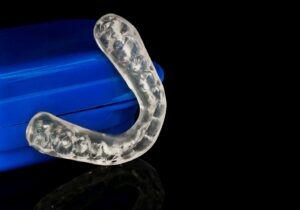
If you grind or clench your teeth while you sleep, a nightguard can help protect your teeth from excessive wear and damage. But when you start shopping for one, you may notice there are many options available, from inexpensive nightguards at your local pharmacy to custom appliances made by your dentist. So, what’s the difference between a professional nightguard and an over-the-counter (OTC) option? Keep reading for a thorough breakdown.
What is an Over-the-Counter Nightguard?
OTC nightguards are designed to provide a more affordable, convenient option for people who want to protect their teeth from nighttime grinding. Many are made from soft materials and are designed to be trimmed or molded at home.
Because they’re mass-produced, they aren’t specifically designed for your teeth or bite. Some may feel comfortable, while others can be bulky, slip out of place, or make it difficult to speak or sleep comfortably.
For occasional or mild grinding, an OTC product may seem appealing, but it isn’t necessarily appropriate for everyone.
What is a Professional Nightguard?
A professional nightguard is custom-made using impressions or digital scans of your teeth. Your dentist designs the appliance based on your individual bite, jaw structure, and specific needs.
Because it is made specifically for you, a custom nightguard generally offers a more precise fit and can be designed to provide protection without unnecessary bulk.
Your dentist can also determine which type of material and design is most appropriate based on whether you primarily clench, grind, or have other dental concerns.
Better Fit and More Personalized Protection
One of the biggest advantages of a professional nightguard is customization. A poorly fitting appliance may shift while you sleep or create uncomfortable pressure on certain teeth.
A dentist can evaluate your bite and make adjustments when necessary. This is particularly important for people with significant bruxism, existing dental restorations, jaw discomfort, or a history of dental problems.
A custom appliance may also be more durable, potentially making it a better long-term investment for people who grind heavily.
Which Option is Right for You?
An OTC nightguard may be sufficient for some people, but it’s not a universal solution. If you experience frequent headaches, jaw soreness, tooth sensitivity, worn enamel, chipped teeth, or damaged dental work, these may be signs of significant nighttime grinding.
Rather than choosing an appliance based solely on price, consider having your dentist evaluate your teeth and bite first. They can determine whether a nightguard is appropriate and recommend the design that best fits your needs.
Nighttime grinding can cause significant damage if left unmanaged. While OTC nightguards can provide a convenient starting point for some patients, professional nightguards offer the advantage of a customized fit and personalized protection.
About the Author
For more than 15 years, Dr. Tonie C. Lewis has been providing gentle, conservative oral healthcare that integrates technology when possible to improve her patients’ experiences. An award-winning graduate of the Howard University College of Dentistry, she’s certified in Invisalign and laser dentistry and is a member of the American Academy of Esthetic Dentistry. Preventive care, including custom-made nightguards, is just one of many services Dr. Lewis and her team at Allen Smile Design offer. Schedule your appointment through our website or by calling our Allen office at (972) 954-9728.